
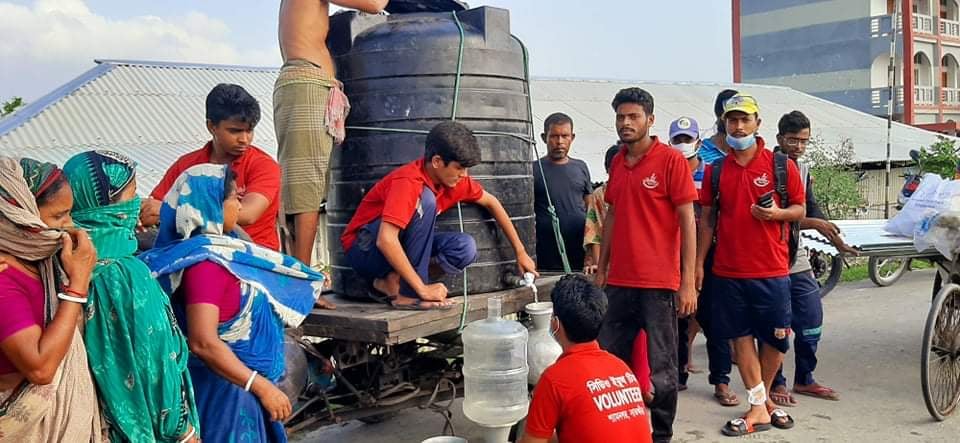
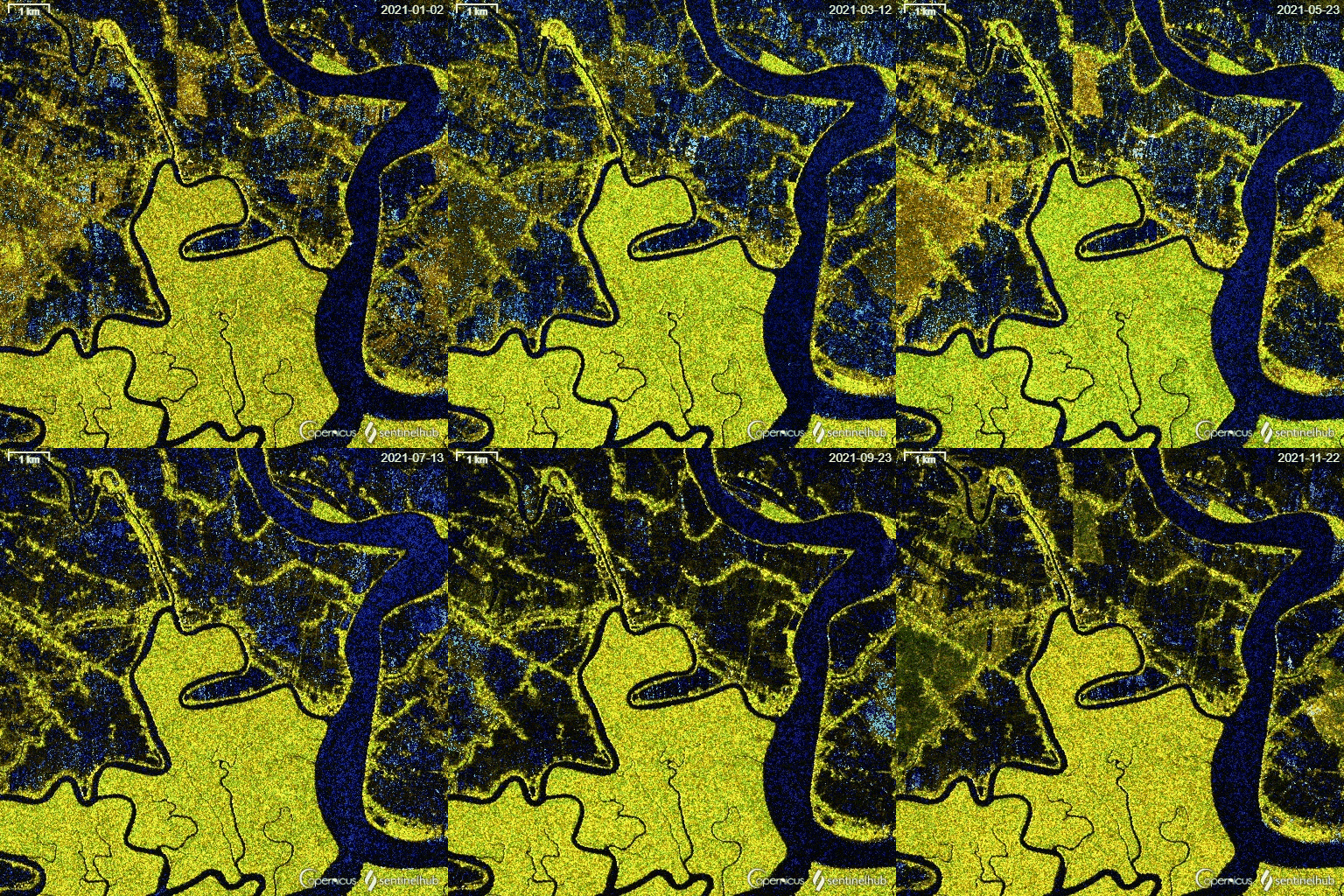
Water destroys their agriculture land, their houses, all their personal things and they are losing their activities. This is the observation that can be made in Datinakhali village, close to the Sunderbans, the largest mangrove forest in the world. Situated in the coastal zone, the local population has to overcome more than anything the floods due to the rising waters.
For their personal safety most of them have to migrate from their motherland. Nevertheless, in the cities, there is not enough space for them and especially they don’t want to leave. So, they try to deal with the problems themselves, helped by Barcik, and look for survival solutions. This is particularly the case of Shefali Bibi, the community leader from a fishing family, living in the forest and of Piramin Ishak, in charge of planting trees and following changes on the coastal plantation.
What do you have to overcome in your daily life because of the rising waters?
Shefali Bibi: “Basically, our agricultural lands and villages are contaminated by the saline water because of to the rising waters. It damages our houses and we lose our productions, fish farms, vegetable gardens and money. We are very poor; we live with just 1 dollar per day and we have already lost most of our personal things. Our village is situated on the bank of the river so we have to face the problem more than other people. We have not enough space to live, and no money to purchase new land or rent a new house. So, some people live on the open street and they are suffering.
The most difficult thing is that we can’t find drinking water but also water for the bath. The consequence is that there are discriminations between men and women. Men can go to very distant places for their bath but like the other women I can’t do the same. I have to take a shower with the saline water. And because it, we are affected by different types of diseases, skin diseases and diseases of women linked to our reproductive health. The number of womb infections and abortions is increasing and our children are also affected by diseases due to the saline water. But we can’t talk about our health problems openly because of the male dominated society. There are social discriminations more than climate change.”
How do you see solutions for the future? And what do you need to have these solutions?
Piramin Ishak: “First of all, we want strong and sustainable embankment. We have not any intentions to migrate from our village to live in any part of the word. But we need to increase our livelihood options, working places and our employment. Moreover, the river has not enough depth, we need river projects. My community tries to cope with the climate changing situation but we have not enough resources like saline tolerant seeds. We need more community adaptation budget to minimise our risks, to develop drinking water projects and also to increase the tree plantations and more budget for our lands and agriculture.
In these solutions there are some rules and responsibilities for the community, for the state but also for the global community, the foreigners like the French, the Germans, the Americans… Rich and developed countries have to do something through finance, technologies, or policies because they are responsible. They have to cooperate with vulnerable countries. Moreover, if we want to do something real for climate-vulnerable people, we need a strong and reliable zero carbon agreement. We believe the new generation, our future leaders, will solve the problem and find solutions. We have limited resources but unlimited spirit.”